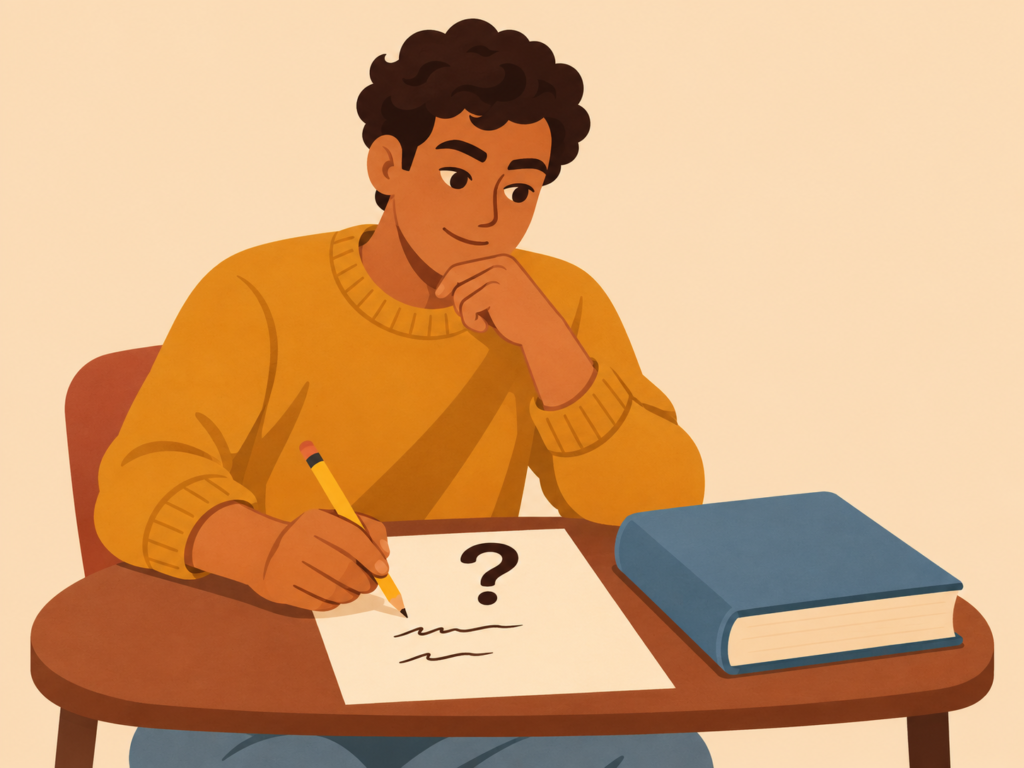
A brief attempt before reading can improve memory for the answer, even when the attempt is wrong.
In a 2009 study by Lindsey Richland, Nate Kornell and Liche Sean Kao, students who tried questions before reading a text later remembered more of the information those questions asked about. They benefited even when their first answers were wrong.
The surprising part is what they gave up to make those attempts: time with the text itself.
In the first experiment, students studied a short passage about vision under two different arrangements:
- Reading only: ten minutes to study the passage.
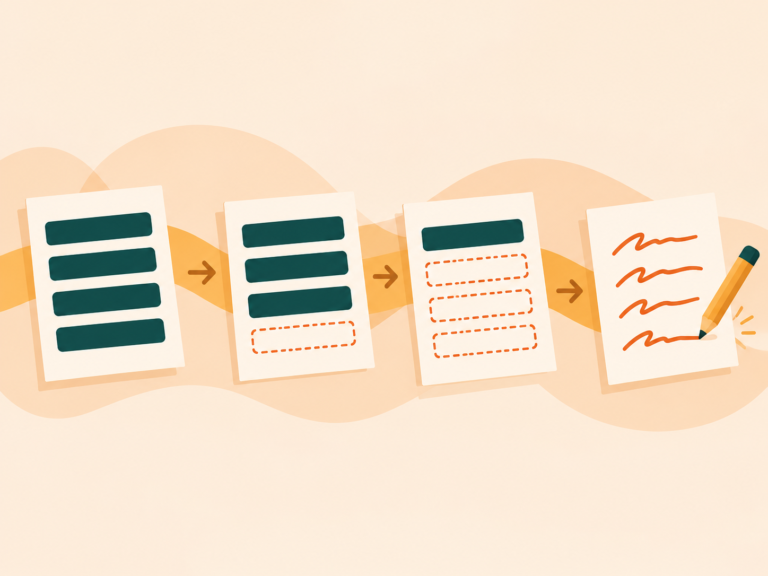
- Questions first: two minutes attempting five questions, followed by eight minutes studying the passage.
Both groups had ten minutes in total. On a test immediately after reading, the questions-first group did better on the prequestioned information in an analysis that excluded initially correct answers. Simply giving those students more time on the task cannot explain the result. They had less reading time, yet learned the targeted answers better.
Researchers call this approach pretesting or prequestioning. Unlike a quiz after a lesson, it asks you to attempt an answer before you've learned the material. Across five experiments, Richland and her colleagues found an advantage for pretested information, including in an experiment with a test a week later.
For a student deciding how to begin a reading session, this offers a useful possibility: a brief attempt at a relevant question may be worth some of the time you would otherwise spend reading. You don't have to wait until you know enough to get it right.
That conclusion has limits. The comparison tests a sequence of activities: attempting questions, then studying the passage. It doesn't isolate the act of making a mistake as the cause of better learning. Nor does success on the targeted test questions establish that students learned the whole passage better.
The benefit is mostly about what you ask
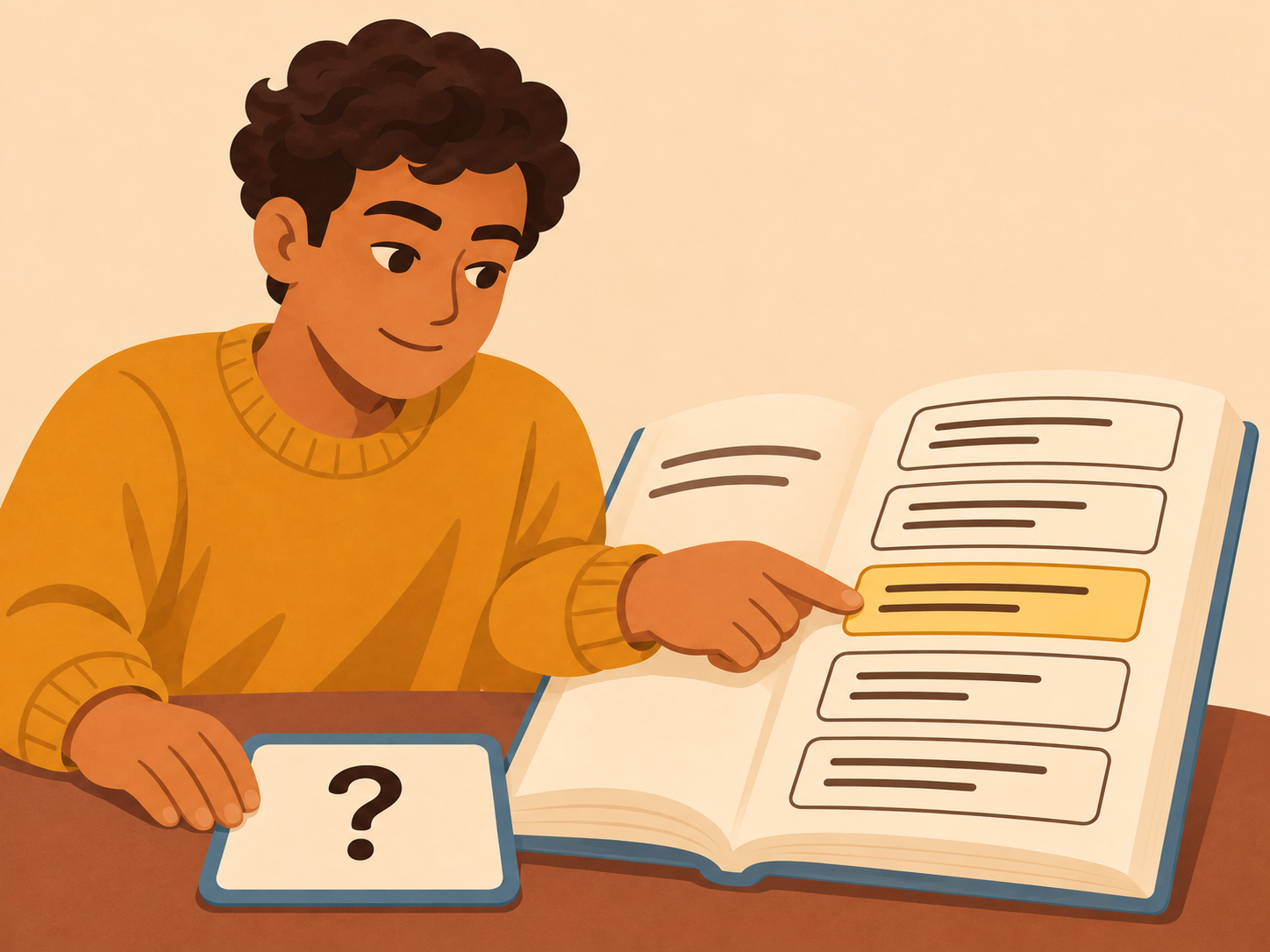
The distinction between learning an answer and learning an entire chapter becomes clearer in the wider research.
A meta-analysis published in the 2024 volume of Psychonomic Bulletin & Review separated two kinds of result: memory for information that had been prequestioned, and memory for other information in the same learning material. It found a meaningful average benefit for the prequestioned information, but almost no average benefit for the rest.
That is an average across studies, not a rule that every experiment followed. Still, it gives us a more useful expectation than “questions improve learning.” A question about one process may help you remember that process. You shouldn't count on it to improve your memory for everything around it.
This makes question choice important. An instructor's preview question or a relevant textbook question may point you toward something worth learning. A question you invent from a heading can also give you a place to begin. But if your course requires five related ideas, asking about one of them does not remove the need to study the other four.
Much of this research involves university students learning short texts and taking later tests. It supports trying prequestions on a manageable piece of material. It doesn't establish higher course grades or faster mastery of every subject.
What the first attempt may change
One plausible explanation is that a question changes how you read what follows. You have a particular answer to look for. You may become curious about it, notice a relevant passage, or compare the explanation with your own prediction.
A review by Steven Pan and Shana Carpenter examines these and other possibilities. No single mechanism is settled. The more dependable practical requirement is that the learner subsequently gets an opportunity to learn the correct answer. A guess left uncorrected is not the sequence studied here.
Newer comparisons also caution against making the first attempt too elaborate. In two experiments published in 2026, students who answered prequestions mentally benefited similarly to students who typed their answers. In the second experiment, preview statements told students what they would learn without giving the answers. Reading these statements produced a similar benefit on the targeted questions to answering prequestions mentally or in writing.
Those studies used factual texts and short-delay tests. They don't make every kind of preview interchangeable, but they do weaken the case for treating a written response, or a wrong response, as an essential ingredient. Writing down your first answer can make it easier to compare with the explanation. There is no reason to manufacture an error if you have nothing to say.
An example with two spoons
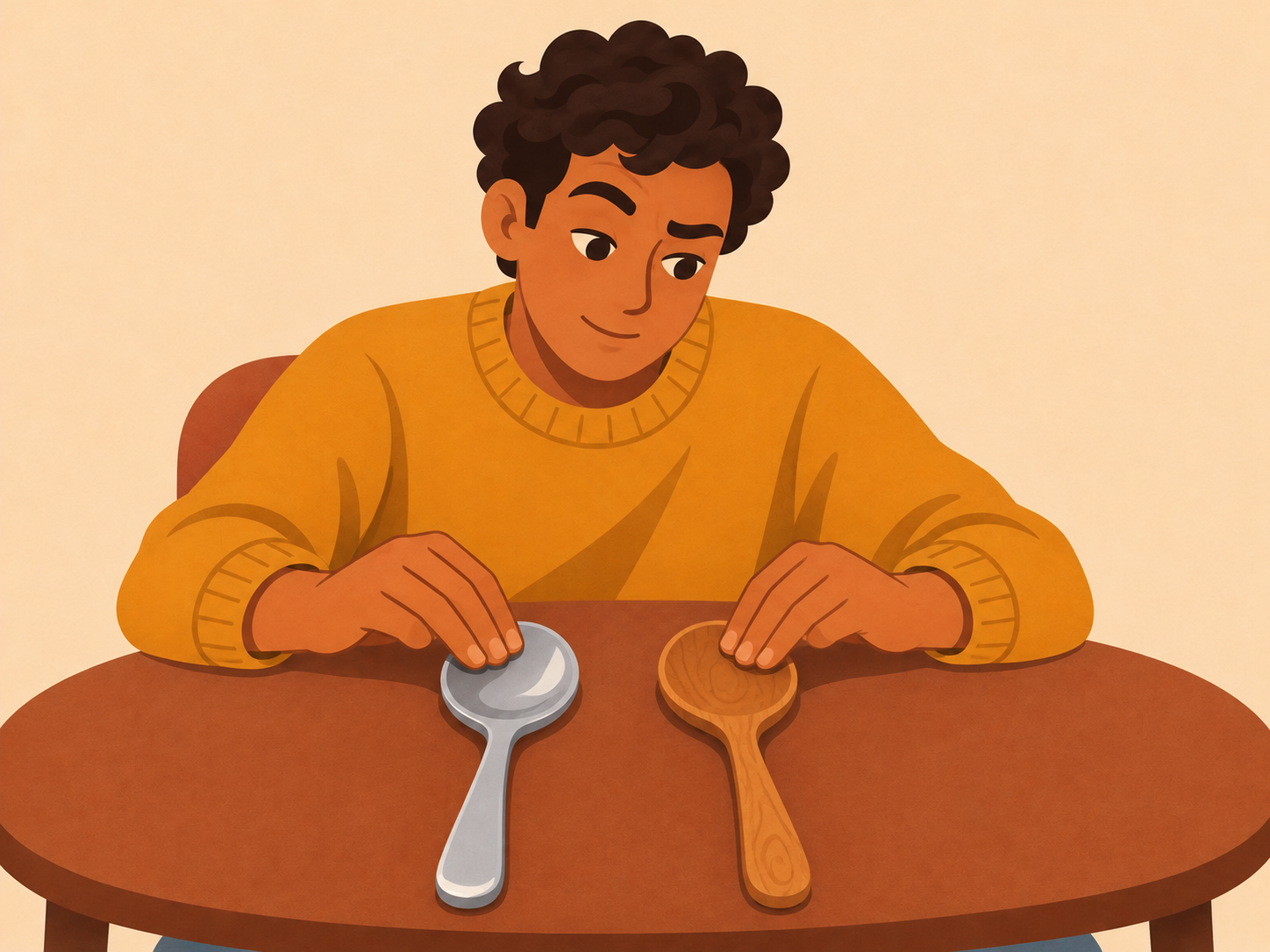
To see what the routine looks like, consider a small example. A metal spoon and a wooden spoon have been sitting in the same room all afternoon. The metal one feels colder. Try explaining why before reading the next paragraph.
If your first thought is that the metal is at a lower temperature, the explanation has a specific point to resolve. Once both spoons have settled to room temperature, they are at the same temperature. In a room cooler than your skin, the metal draws heat from your hand faster. That faster heat loss makes it feel colder, as the American Physical Society explains.
The useful correction is more than swapping one answer for another. “The metal starts colder” becomes “the spoons start at the same temperature, but the metal removes heat from my hand faster.” You can now identify the distinction your first explanation missed: temperature and the rate of heat transfer are different things.
Keep the routine small enough to use
Before your next reading session, choose one or two questions that the upcoming material actually answers. Turning a heading into “How do plants move water from roots to leaves?” gives you a more manageable starting point than asking yourself everything you ought to know about plants.
The following routine is a practical suggestion. The research does not establish this exact number of questions, time limit, or combined sequence as the best way to study.
Make a brief attempt. Say or write what you currently think. An unfinished explanation is enough. If nothing comes to mind, notice the gap and move on to the material. The two-minute period in the 2009 experiment describes that study's design, not a rule you need to follow.
Read, then compare. Look for the answer in a trustworthy explanation. Work out which parts of your first idea hold up and what needs changing. If your answer was wrong, make the correction explicit and explain why. With the spoons, the important change is recognizing that how cold an object feels depends on more than its temperature.
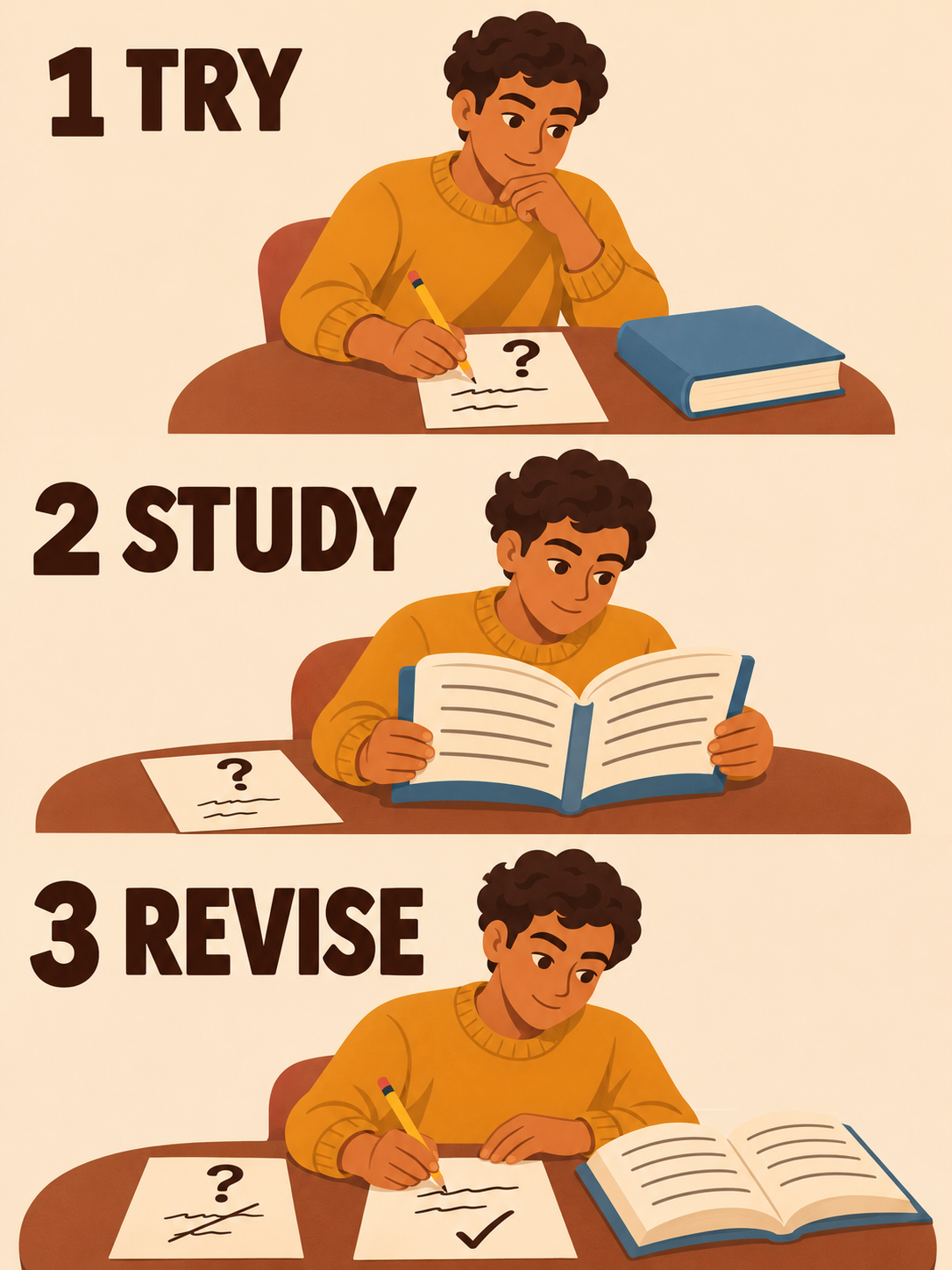
Keep reading beyond the answer you came to find. Your question directs attention to one part of the material; your course or reading goal determines what else you need to cover.
Return to the question later. Close the material and try answering again. This is retrieval practice after learning, a separate step you can include in your spaced review routine.
When an explanation should come first
A prequestion needs to be understandable enough to attempt. If the vocabulary is unfamiliar, read the introduction first. If you're facing a multi-step procedure and have no idea how to begin, a worked example may offer a more useful starting point.
There is little reason to spend half an hour staring at an equation just to preserve the order of “question first.” The studies above give you a reason to try a brief attempt followed by an explanation. They don't give you a reason to prolong being stuck.
For your next short section of reading, put one relevant question at the top of your notes. Leave room beneath your first answer for what you learn from the explanation.